Hays Water Bill Set to Drain County Control Across the State
Hays' legislative end around move on their lawsuit action is full steam ahead, unless you help throw on the brakes
The Senate committee hearing on HB 2433 took place last Thursday, February 26, 2026, in Room 142-S before the Senate Committee on Local Government, Transparency and Ethics. What struck me most about the discussion was how frequently legislators referred to it as the "Hays Water Bill"—a shorthand that underscores its origins in addressing the long-standing water needs of the city of Hays and its proposed transfer from the R9 Ranch in Edwards County. Yet, this narrow framing risks overlooking the bill's much broader scope.
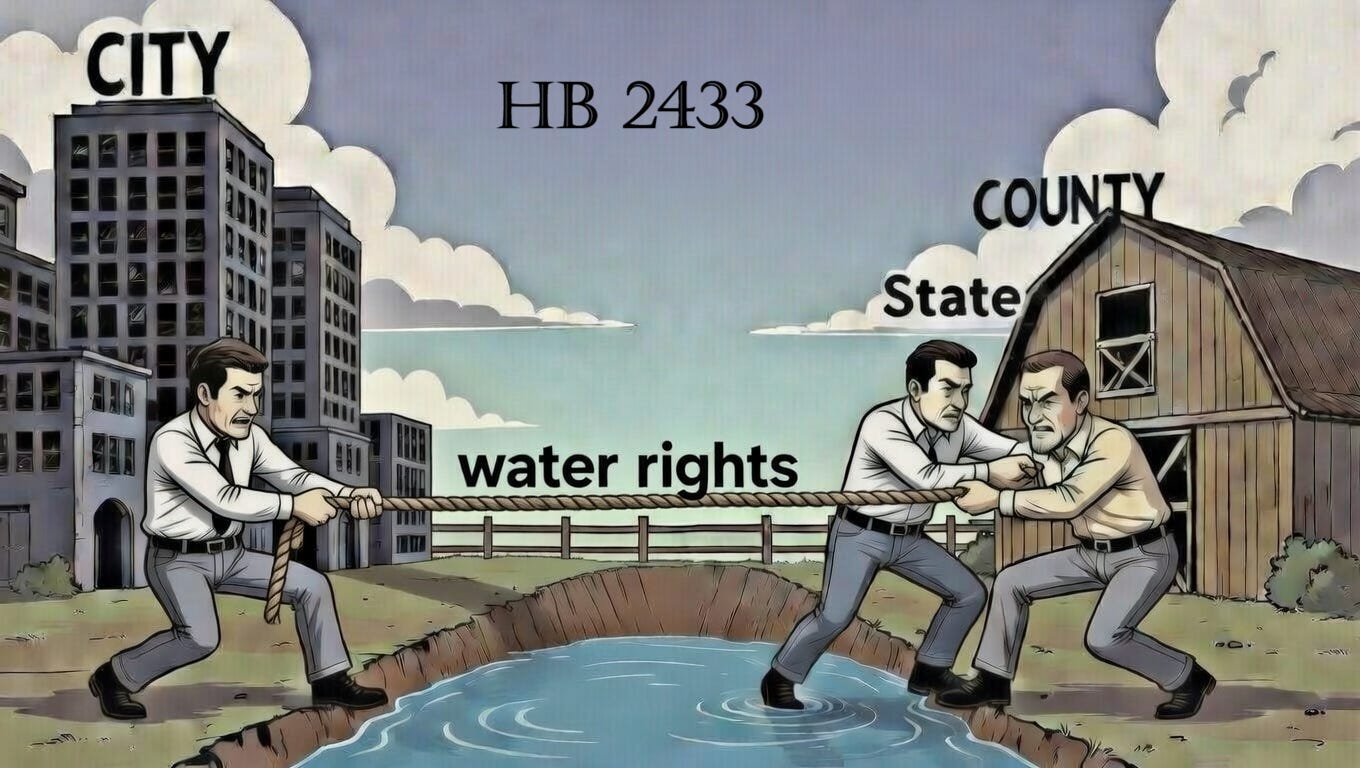
HB 2433 isn't just about one city's pipeline project or resolving an 11-year (or longer) dispute over water rights and infrastructure. The legislation clarifies—and significantly limits—county authority over the transfer or appropriation of water across the state. It places primary oversight with the state's chief engineer and the water transfer hearing panel, prohibiting counties from:
- Requiring permits, licenses, or conditional use approvals for water transfers or appropriations (beyond domestic use).
- Imposing restrictions, conditions, limitations, fees, or charges related to such activities.
- Enacting or enforcing any local resolutions that conflict with, duplicate, or go beyond state-level regulations.
Crucially, these changes would apply retroactively to existing county actions and prospectively to future ones, meaning it could override local controls in any Kansas county where water transfer or appropriation issues arise—not just those directly involved in the Hays project.
A recent article in the Great Bend Tribune (published this weekend) provides fresh context on the opposition, particularly from Edwards County residents and officials deeply involved in the R9 Ranch dispute. The piece highlights how the bill is seen as a way to resolve a 31-year battle between Hays/Russell and Edwards County, involving multiple lawsuits and administrative challenges over the proposed water transfer from the Upper Arkansas to the Smoky Hills basin. Supporters frame it as a necessary clarification to end prolonged legal fights, but opponents—including local leaders—warn it hands too much power to state officials, potentially nullifying ongoing litigation (with a court decision expected in at least 60 days) and setting a dangerous precedent for rural areas.
Key voices quoted in the Tribune include:
- Heather Strate, Edwards County Economic Development Commission Executive Director: “The bill essentially hands authority over to the Chief Engineer and Water Transfer Hearing Panel and insulates that authority from any local action.”
- Mark Frame, Edwards County Attorney: “This bill did not arise in a vacuum. Many stakeholders have spent years engaged in detailed, evidence-based challenges to massive water projects and their overreach. Those challenges have exposed significant flaws about aquifer depletion and land-use impacts engineered behind closed doors by Kansas officials that have now gone through the revolving door to work for the firms that engineer this sort of work.”
- Richard Wenstrom, Edwards County farmer, irrigator, and member of Water PACK: He emphasized concerns over pumping volumes, noting expert analysis showing that exceeding 2,200 acre-feet per year could impair the local region. Wenstrom suggested that capping the amount sustainably (and incorporating it into any Master Order) could end opposition from his group and the county.
Since my previous article was published, the response from grassroots Kansans has been overwhelming and eye-opening. What started as a warning about a rushed House process has snowballed into significant rural mobilization. My piece helped spark widespread awareness, leading to a packed committee hearing last Thursday. The room was filled with concerned citizens, county officials, farmers, ranchers, and residents from across the state who turned out to voice opposition—many traveling to Topeka to make their voices heard in person.
Even more telling is the volume of written testimony submitted in opposition. Reports from attendees and local organizers indicate a substantial number of written submissions flooded in ahead of the deadline, reflecting deep grassroots concern about preserving county home rule and local control over vital resources. Yet, strikingly, much of this opposition testimony does not appear to be fully posted or easily accessible on the official Kansas Legislature website at this time—despite being submitted and acknowledged during the process. With the expectation of this legislation being worked this week, why is opposition senate committee testimony not listed?
Adding to the chorus of opposition is Bob Rein, Pawnee County Commissioner and President of the Kansas Natural Resource Coalition (KNRC), which represents Boards of County Commissioners from 35 Kansas counties (about one-third of the state) on natural resources, land use, and local governance. In his written testimony submitted during the House committee process (January 27, 2026), Rein strongly opposed the bill, describing it as "an expansion of state-level authority... at the direct expense of county home rule powers." He argued that counties have not requested this centralization and urged a "no" vote to maintain local authority over critical water resources. You can read his full testimony HERE. The Tribune article notes Rein's ongoing involvement, including his attendance at the Senate hearing and his observation that proponents often get priority in presentations.
The speed at which this bill has advanced remains deeply concerning. Sponsored by Hays’ own Rep. Barb Wasinger, it was fast-tracked by House leadership. After introduction, it was shifted from the Committee on Water to the Committee on Local Government with a hearing hastily scheduled. It moved to the House floor soon after and was brought to a vote with limited time for debate and opposition—passing 116-6 on February 10 (with notable "no" votes like Rep. Brett Fairchild citing it wasn't a good fit for his constituents). It then landed in the Senate and was scheduled for hearing almost immediately after referral. Legislation in Topeka does not move like this without strong leadership support.
Major mainstream media coverage has been sparse, leaving much of the public—including rural residents and county officials outside the immediate affected areas—largely unaware until grassroots efforts amplified the issue. This lack of widespread attention, combined with the rapid timeline, gives the impression of momentum on autopilot: a push to centralize control at the state level before organized opposition from all corners of Kansas can fully mount and be fully reflected in the public record.
Rural Kansas communities have long valued local control over resources that directly impact their land, economy, agriculture, and way of life. This bill could set a precedent that diminishes counties' ability to protect those interests when large-scale water projects are proposed, whether for municipal use, industry, or other purposes. It's not merely a "Hays" issue—it's a Kansas-wide question of who gets the final say on water management.
If you're concerned about preserving local authority and ensuring rural voices aren't sidelined in decisions that could affect water resources statewide, now is the time to act. The bill remains in committee following last week's packed hearing, and with the legislative session moving forward, it could advance quickly to the full Senate floor if not checked.
I urge you to contact your state senator **immediately**—today if possible. Politely but firmly express your opposition or request for more thorough review, highlighting how HB 2433 impacts all counties, not just one city; noting the strong grassroots opposition demonstrated at the hearing and through the flood of written testimony; and even referencing concerns like those from Commissioner Bob Rein, Edwards County officials, or Water PACK about eroding county home rule, aquifer sustainability, and state overreach. You can find your senator's contact information BY FOLLOWING THIS LINK AND ENTERING YOUR ADDRESS. Keep it short, but make sure you say “NO to HB 2433” and include your town/city with your name—your voice could tip the balance.
This isn't about denying any community access to water—it's about balance, transparency, and ensuring big-city needs don't automatically override rural safeguards without broad, fully documented input from all Kansans. There is a legal process that Hays is trying to circumvent to solve their issues; do not let their legal challenges limit your county's local control! Let's make sure our senators hear the full scope of opposition before this moves further.
Stay informed, stay engaged, and thank you for raising your voice on this critical issue. I'll continue tracking developments and will update as more comes to light.


